

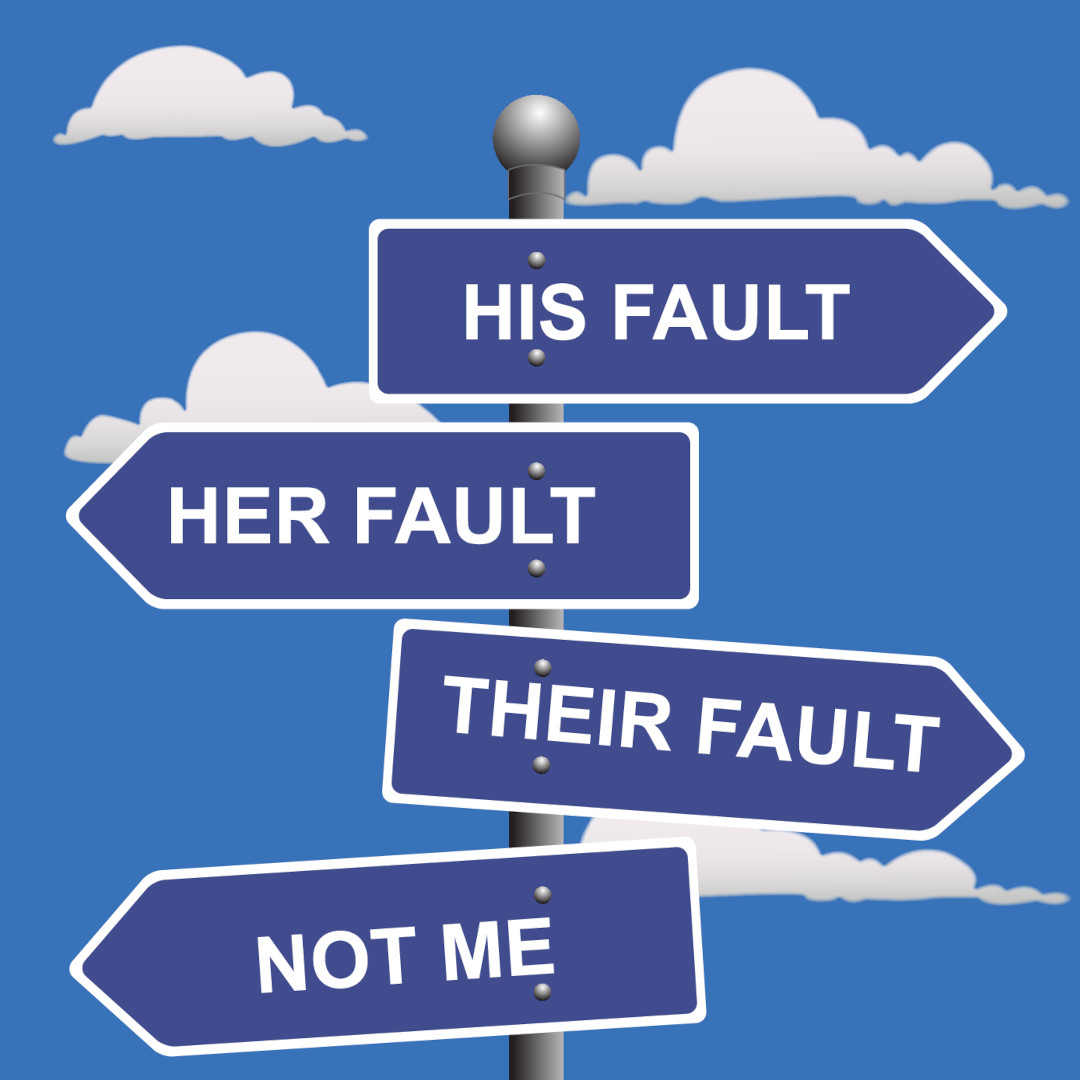

When Taking Responsibility Becomes a Trauma Response
In my professional life, I live by a code of extreme ownership. As an executive, I have learned that when things go wrong, you look in the mirror first. You ask, “What could I have done differently? How did I fail to communicate? How can I lead better?”
In leadership, taking the blame is a badge of honor. It signifies strength, maturity, and a willingness to grow. Naturally, I brought this same philosophy into my marriage. For years, I have operated under the assumption that if there is conflict, chaos, or distance, the call is coming from inside the house—and I am the one holding the phone.
Recently, I sat in a therapist’s office and laid out my familiar thesis. I explained, with the calm rationality of a man analyzing a budget report, that I was “99% of the reason” for the dysfunction in my marriage. I listed my flaws. I cataloged my failures. I explained that if I could just calibrate my behavior perfectly, the system would finally work. My therapist didn’t nod. They didn’t commend my humility. They looked at me and said, “That sounds like the reasoning of a victim of domestic abuse.”
The air left the room.
I am not a victim. I am a leader. I am a problem solver. I am the guy who fixes things after hurricanes. “Victim” is not a title on my CV. But as we unpacked that statement, I realized that my “99% theory” wasn’t an act of noble leadership. It was a survival mechanism.
Here is what I’ve learned about the dangerous math of the “99%”:
1. The Illusion of Control Believing you are the sole problem is seductive because it offers a terrifying kind of hope. If I am the problem, then I can be the solution. If the failure is entirely mine, then I possess the power to fix it by simply working harder, being quieter, or anticipating needs faster.
To admit that the problem is 50/50—or perhaps mostly not me—is to admit that I am powerless. It means that no matter how much I change, the result might remain the same. For a leader, powerlessness is far scarier than guilt.
2. The Erasure of Self To reach a point where you genuinely believe you are responsible for another adult’s emotions and reactions, you have to systematically edit out your own reality. You have to ignore the times you were provoked. You have to categorize your reasonable needs as “demands” and your partner’s unreasonable demands as “standards.”
I realized I had confused “keeping the peace” with “making peace.” Keeping the peace requires you to suppress your voice to avoid triggering an explosion. That isn’t partnership; it’s hostage negotiation.
3. The Statistical Impossibility Relationships are systems. Even in the most lopsided dynamics, it is statistically impossible for one person to be 99% of the error. When we accept that ratio, we aren’t being humble; we are being gaslit—sometimes by our partners, but often by ourselves. We accept a narrative that says, “You are lucky anyone puts up with you,” and we call it gratitude.
The Hard Pivot Unlearning this is harder than learning it. It requires looking at the “ledger” of the relationship with clear eyes, not through the lens of shame. It means acknowledging that a marriage takes two builders to stand, but only one demolitionist to fall.
If you, like me, find safety in taking the blame, I challenge you to ask yourself the question I am currently wrestling with: If you stopped carrying 99% of the weight, would the other person pick it up? Or would the whole thing collapse?
The answer to that question tells you everything you need to know about whether you are in a partnership or a trap.