

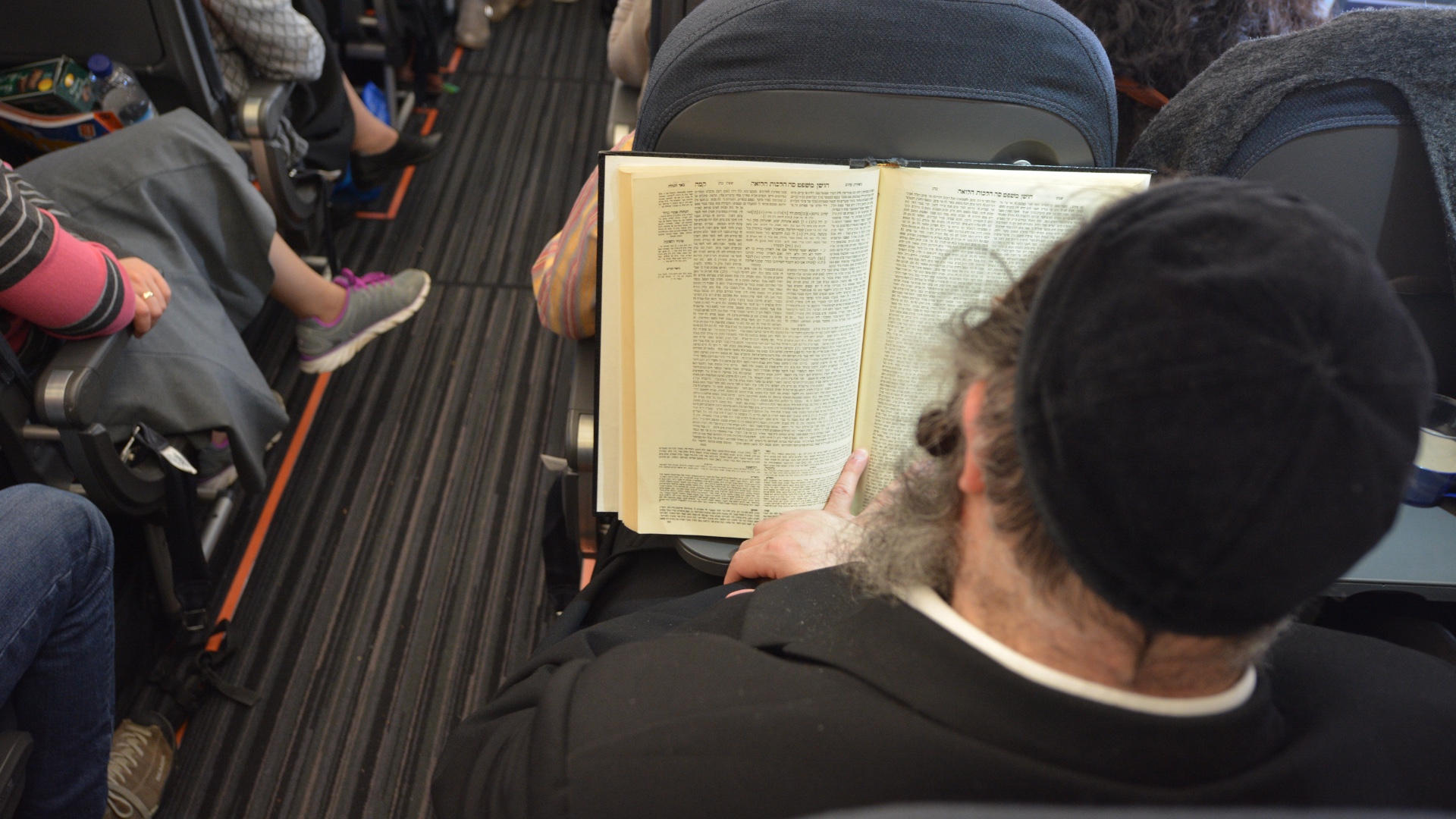

The airplane cabin is abustle with motion and muted conversation. We are high above the Atlantic, but for many of the passengers, the day has just begun. Around me, Jewish men are rising for their morning prayers (Shacharit).
They open the overhead bins, not to retrieve luggage, but to take out the tools of their devotion: the tallit(shawl) they place over their shoulders, and the tefillin (leather boxes containing scrolls) they carefully wrap around their arms and place upon their foreheads. Collectively, they turn to face the east. They begin to bob back and forth, reading from scripture and prayer books with an intensity that shuts out the hum of the jet engines.
Watching from my seat, my first thought is honest and perhaps a bit lazy: Man, that is a LOT of work.
I find myself conflicted. As someone sitting on the sidelines, I am thankful that my expression of faith does not require such arduous observance of rituals. I enjoy the freedom of grace. And yet, everything they are doing is deeply rooted in specific commands from the very Scripture I claim to follow.
The Biblical Pattern
We often forget that the rhythm of prayer these men are following isn’t arbitrary. Jews pray three times a day: morning, noon, and evening. This isn’t just tradition; it is presented in the Bible as the pattern of the Patriarchs and the Prophets.
- Morning: Abraham stood before the Lord early in the morning (Genesis 19:27).
- Afternoon: Isaac went out to meditate in the field at the turning of the evening (Genesis 24:63).
- Evening: Jacob encountered God at nightfall (Genesis 28:11).
- The Discipline: King David wrote, “Evening, and morning, and at noon, will I pray” (Psalm 55:17), and Daniel famously knelt three times a day to give thanks (Daniel 6:10).
Watching them, I have to ask: Does God expect this of us? Have we traded discipline for convenience?
The Hat in My Lap
As I lurked under my paltry airline blanket, wrestling with these thoughts, a black brimmed hat suddenly tumbled onto my lap.
The elderly Jewish man standing in the aisle looked down, embarrassed. He was in the middle of his prayers but stopped, patiently waiting for me to reach down and retrieve it for him. He was very apologetic for waking me, his face weathered but kind.
In that moment, the theological became personal. This wasn’t a performance; it was a life of devotion. Despite the “Christian arrogance” that often claims, “I know I am going to Heaven because of X, Y, and Z,” I think we can all agree that God is the final judge. We will not truly know until we cross over to the other side.
However, there is one thing that both the Old and New Testaments agree on: We will be judged according to all that we have done. (Ecclesiastes 12:14, 2 Corinthians 5:10, Revelation 20:12).
So, looking at the devotion in the aisle, the question becomes: How then shall we live?
The Oil of Preparation
Jesus tells the harbinger story of the Ten Virgins (Matthew 25). In the parable, ten women were waiting for the bridegroom. Five of them were wise; they continually prepared, ensuring their lamps had oil. They made sure their business was in order, doing all they could to be ready, because they knew that when the bridegroom came, they needed to be ready in an instant.
The other five were foolish. They were busy with other things. They neglected the preparation. When the bridegroom finally arrived, they were scrambling. They were left behind.
The warning is clear: Do nothing, get left.
Watching these men pray with such fervor, I wonder if they are filling their lamps while I am merely trusting in a label. Am I doing enough? Or am I fooling myself into thinking that minimalistic complacency is sufficient to save?
We are flying toward the Holy Land, but looking at the devotion surrounding me, I wonder if I am truly traveling toward God, or just coasting.