


In a previous post, I considered the mind-boggling case of the Lampsilis rainbow mussel—a creature with no eyes that somehow “knows” exactly how to construct an active, lifelike replica of a minnow to lure its prey. It is an evolutionary paradox: a blind creature emulating biodiversity it cannot physically see or comprehend.
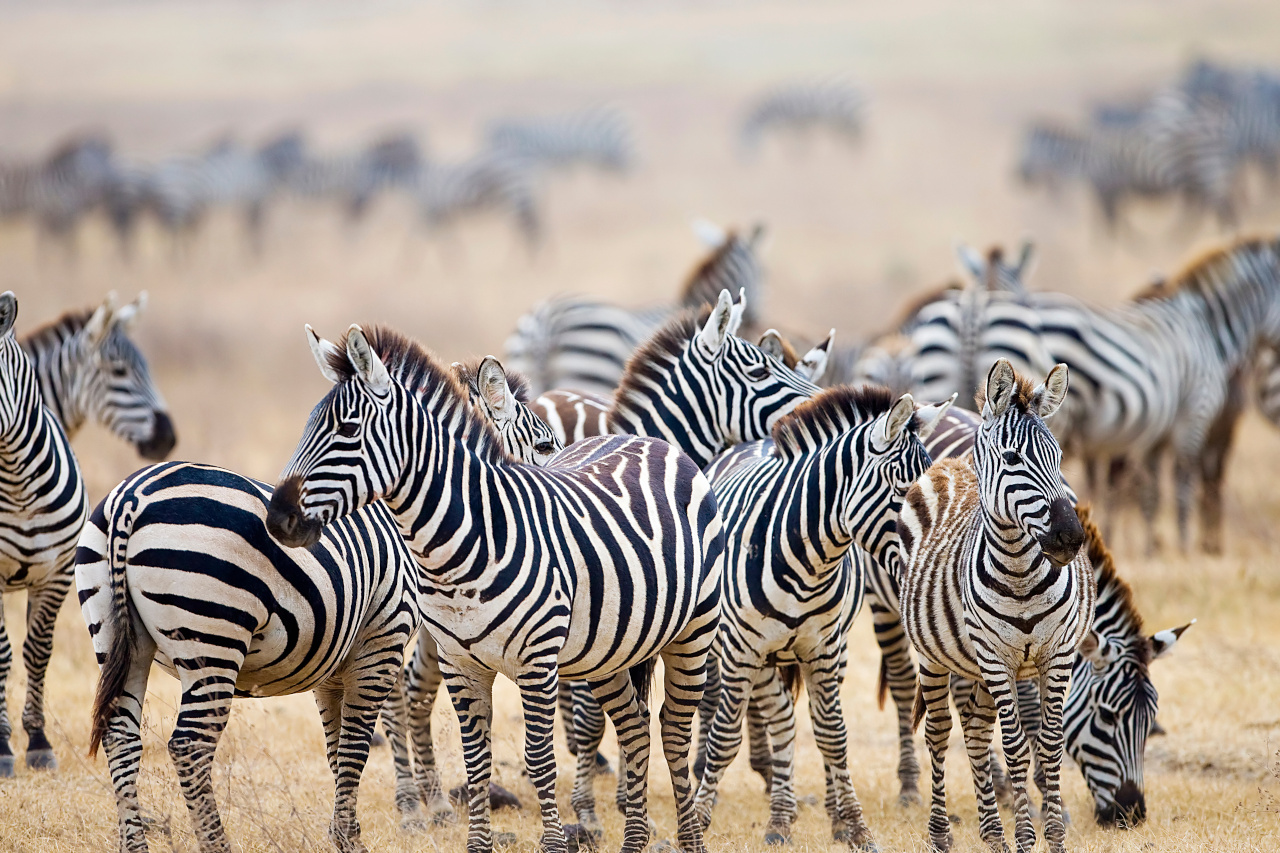
But this phenomenon isn’t just limited to riverbeds and invertebrates. We find the exact same logical derailment on the African savannah, sitting right on the hide of one of the world’s most recognizable mammals: the zebra.
The “Anti-Fly” Engineering of Zebra Stripes
For over a century, scientists have argued about why zebras have stripes. Was it camouflage against lions? A temperature regulation mechanism? Recently, evolutionary biologists have largely coalesced around a fascinating discovery: the stripes prevent biting flies.
Blood-sucking pests like the tsetse fly and horsefly carry fatal diseases across Africa. Researchers discovered that these flies have complex, compound eyes that are completely disoriented by polarized light patterns. When a fly approaches a solid-colored animal (like a horse or donkey), it can easily gauge its distance and land smoothly. But when a fly approaches a zebra, the alternating black-and-white stripes create an optical illusion—a digital glitch in the fly’s visual processing—that disrupts its depth perception. Unable to tell how fast or close the surface is, the flies fail to decelerate and literally crash-land or bounce right off.
The Presupposition That Defies Logic
From a purely evolutionary perspective, we are expected to accept that this hyper-specific engineering feat is the result of unguided, random accidents over millions of years.
But let’s follow the logical thread here. To believe that natural selection slowly molded the zebra’s coat to defeat a fly’s visual cortex requires a massive, unprovable leap. How would a zebra “reason” or interpret biting flies in such a way to respond with a physiological transition?
The answer from materialist science is that the zebra didn’t reason at all. It was just a series of fortunate typos in its DNA. A primitive horse-like ancestor allegedly had a random genetic mutation that caused a faint stripe. The flies bit that animal slightly less. Millions of years later, after countless generations of random typographical errors in the genetic code, a perfect, mathematically precise anti-fly optical grid emerged.
But like the blind clam mimicking the fish, the zebra has no cognitive understanding of a fly’s compound eye. It doesn’t know how polarized light works. It cannot look at its environment, deduce a survival strategy, and command its own chromosomes to rearrange themselves. The zebra has “evolved” a biological product that completely transcends its own cognitive ability to understand or respond to the stimuli around it.
The Information Problem
If you are familiar with genetics, you know that for a trait to manifest, the necessary programming must be present in the DNA. Without an outside, advanced biological source, we must believe that the single-celled ancestors of the zebra already possessed the latent, hyper-advanced digital information required to eventually build an optical deterrent against insects.
But an amoeba doesn’t have foresight. DNA doesn’t sit in the driver’s seat predicting what kind of pests will populate Africa two billion years in the future, hoping its random mutations will prove to be a winning combination.
When we see a highly advanced piece of anti-glare, anti-reflective engineering on a smartphone screen, we don’t assume the glass accidentally arranged itself over time to counter human optical biology. We know an engineer studied human eyes and built the screen to match.
The zebra didn’t study the fly. The fly didn’t design the zebra. The only logical conclusion is that the intelligence behind the design exists outside of the animal. The Creator uniquely sequenced the zebra’s DNA with a pre-existing knowledge of the African ecosystem—placing the intricate, protective design directly into its genes so the animal could possess it innately.
Set your mind free from the absurd presuppositions of unguided evolution. The stunning artistry of the savannah didn’t happen by chance; it was spoken into existence by a Master Designer who wove his own brilliant intelligence into every single stripe.